
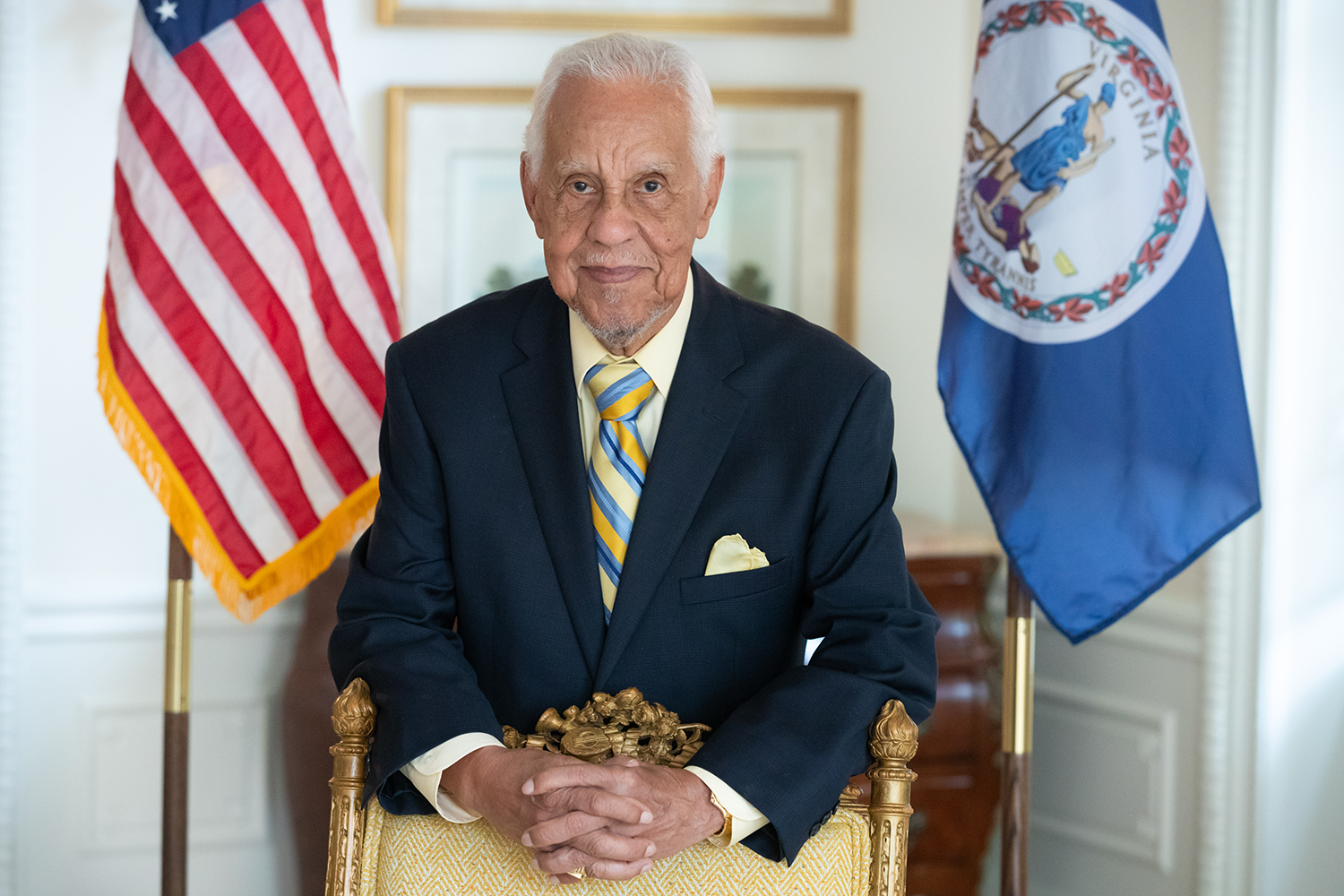
“We the People.” Those opening words of our Constitution establish the foundation of our government and identify those to whom it must remain accountable. They have guided my understanding of public service throughout my life. The authority entrusted to a public official belongs to the people, and its exercise must be judged by how faithfully it serves them.
That principle also guides my hopes for the L. Douglas Wilder School of Government and Public Affairs at Virginia Commonwealth University. Preparing students for public service carries a profound responsibility. They must leave equipped to make sound decisions and grounded in an understanding of whom those decisions affect. They must know that public trust carries obligations that endure beyond a title, an appointment, or an election.
In reflecting upon the school’s progress, I wish to recognize President Emeritus Eugene Trani and founding dean Bob Holsworth, whose vision and leadership brought this institution into being. I remain grateful for their efforts to establish the school and for the honor they bestowed upon me by letting it bear my name. Their work laid the foundation for an institution devoted to preparing future generations for public service. Its continued advancement honors that founding purpose.
From No. 56 in the 2018 edition of the U.S. News & World Report public affairs rankings, the Wilder School moved into the top 50 in 2019 and reached No. 35 in 2023. In the 2026 edition, it is among the top 16 percent of public affairs schools nationally.
That record represents meaningful progress. It also shows that advancement is neither automatic nor uninterrupted. We should acknowledge the fluctuations honestly and approach the future with a determination to improve. The school’s standing among its peers is a credit to the faculty, staff, students, and alumni whose efforts have sustained its work.
The deeper significance of that work lies in the quality of public service it makes possible.
Throughout my service as a state senator, lieutenant governor, governor, and mayor, I understood that government’s decisions reached directly into people’s lives. A budget establishes priorities that citizens experience in their schools, neighborhoods, and access to services. The administration of a public program can determine whether an individual receives needed assistance or encounters another barrier. The willingness of an official to listen can determine whether a community has a meaningful voice in its own future.
Public service requires us to understand those consequences and accept responsibility for them. It demands competence, integrity, and the courage to answer for our decisions. Above all, it requires respect for the people whose trust gives government its authority.
The Wilder School’s strengths speak directly to these responsibilities. In the 2026 rankings, four specialties placed among the nation’s top 25: Homeland Security and Emergency Management at No. 8, Local Government Management tied at No. 21, Social Policy at No. 22, and Public Management and Leadership tied at No. 25.
Each concerns a fundamental expectation of government. People expect their communities to be prepared for emergencies. They expect local officials to respond to their concerns. They expect public policies to be administered fairly and public resources to be managed responsibly. Preparing leaders capable of meeting those expectations is work of lasting importance.
“We the People” must include those whose voices are too often unheard and whose circumstances are too easily overlooked. Public servants have a duty to consider whether the opportunities government promises are accessible to the people it serves.
The school’s commitment to social equity gives that obligation a place in the education of future leaders. Students must learn to examine who benefits from a policy, who encounters obstacles, and what changes are necessary to ensure fair treatment. Our founding principles require that continuing examination.
NASPAA, the national accrediting organization for public affairs master’s programs, recognized the school’s Master of Public Administration program with its Social Equity Award in 2016 and honored the school’s curriculum with its Social Equity Curriculum Award in 2024. The decision to make the MPA available fully online in 2022 also extended access to students unable to attend in person. These efforts demonstrate how an institution can advance the principles it teaches.
The same public purpose is evident in the school’s planning program, whose work connects students and faculty with questions of housing, transportation, and neighborhood development. Its seven-year accreditation renewal in 2021, the longest term available, recognized strengths that included community engagement and applied research. Communities benefit when scholarship is informed by their experience and directed toward problems they are working to solve.
The faculty’s achievements have helped give the school a national voice. Since 2018, its faculty have collectively earned more than 40 national awards. Former dean Susan Gooden’s recognition includes the American Society for Public Administration’s 2025 Dwight Waldo Award, its highest scholarly honor. Professor Jay Albanese received Virginia’s Outstanding Faculty Award in 2022. The school is also home to three Fellows of the National Academy of Public Administration.
Such distinctions bring well-deserved recognition. Their enduring value is carried forward through teaching, mentorship, and scholarship that improves public understanding and practice.
In Richmond, the school has an opportunity to place these commitments into action. State agencies, local government, nonprofit organizations, and neighborhood partners offer students a direct view of public service. Listening to residents, weighing evidence, and helping develop workable solutions can teach lessons that remain with them throughout their careers.
My greatest interest is in what students will do with the education they receive. My hope is that they will enter public life prepared to question, willing to listen, and determined to serve. They should understand that the people have every right to demand what is right and criticize what is wrong, and that those entrusted with leadership have a duty to respond.
The school’s national recognition gives us reason to reflect with satisfaction upon its progress. Its mission calls us to look ahead with purpose. The highest measure of its achievement will be the service its graduates render and the trust they earn.
“We the People” must remain the foundation of that work. The people are the source of our authority, the reason for our service, and the ones to whom we must always answer.
Stay tuned.


