
Up next

Freedom is Never Guaranteed
I found this article, published in the Richmond Times-Dispatch, to be most expressive of what many people feel, particularly at our school. For that reason, I wanted to share it with others who might benefit from Dr. Alvin Schexnider’s thoughtful observations and his candid assessment of issues that warrant serious consideration. https://richmond.com/opinion/column/article_936eb32d-db4d-44ff-a55b-44a0a6cc1016.html
VCU’s retreat on inclusive excellence carries risks | Guest Commentary
ALVIN J. SCHEXNIDER
Aug 8, 2026
Since 1956, when my parents bought our first television, I have been an avid student of politics and world affairs. The term did not yet exist, but I must have been a nerd: my favorite program was “Meet the Press,” moderated by Lawrence Spivak. Then, as now, I was especially interested in those who claim the mantle of leadership. In higher education, as in every field, many hold the title, but few are willing to do the hard work it requires. Sadly, most seem content to go along to get along. That is not leadership. I spent 14 years of my career at VCU, and my views are shaped by that experience and by my commitment to seeing VCU realize its potential.
Accordingly, I am at once amazed and amused by the warp speed at which President Michael Rao reversed course on VCU’s commitment to “inclusive excellence.” In an act of anticipatory compliance, Rao went even further than the law or threats from Washington called for, summarily ending initiatives across the university that took decades to build. Until it blinked, VCU had a diversity office led by a vice president. Since its elimination, does anyone at the highest levels of university administration have a voice on diversity issues? Are diversity, equity and inclusion no longer relevant? And if they are not, what does this say about the mission and values of an institution whose reputation and achievements benefited from the heterogeneity and diversity of the women and men who helped shape it?
As a board governance consultant, I often remind clients that presidents come and go. Still, boards have a fiduciary duty to take the long view and ensure that the university’s mission and core values are upheld. This is an awesome responsibility that should never be taken for granted.
VCU once proudly claimed recognition as a “Diversity Champion.” In fact, VCU received the Higher Education Excellence in Diversity Award for six consecutive years. Senior administrators Murry DePillars and Grace Harris, among others, played key roles in building that reputation. Under DePillars’ leadership, VCU’s School of the Arts became one of the university’s most respected academic units and earned international acclaim. Harris, dean of the School of Social Work, later became VCU’s first African American provost. In the past decade, under former dean Susan Gooden’s leadership, the L. Douglas Wilder School of Government and Public Affairs has risen to the top of national rankings.
Fundraising is a constant in higher education, and VCU is now in a capital campaign scheduled to conclude in 2030. The president and Board of Visitors should remember that VCU’s stakeholders include alums and prospective donors who value diversity. Lonnie Bunch surprised the philanthropic community by raising substantial support from wealthy African Americans to turn the National Museum of African American
History and Culture from an idea into a reality. Washington took notice. Bunch was later named secretary of the Smithsonian Institution, where he has upheld its mission and core values while successfully resisting efforts to remove him.
Similarly, the National Ovation tribute to Gov. L. Douglas Wilder in 2024 raised over $1 million, among the highest sums in the university’s history. VCU’s African American alumni and friends are painfully aware of the school’s backtracking across a wide array of activities. To my knowledge, VCU has not indicated how it intends to address diversity, equity and inclusion, if at all, in the future.
Anyone involved in any aspect of fundraising at VCU should be concerned. If VCU has plans for corrective action, they should be made public.
The University of North Carolina System’s retreat from diversity, equity and inclusion policies may carry financial consequences. Thirty years ago, the family of Dr. Leroy Upperman, a prominent African American physician in Wilmington, North Carolina, established a scholarship endowment at UNC Wilmington that now distributes approximately $40,000 annually. After UNC Wilmington determined that scholarship language referencing a commitment to the African American community would need to be revised to comply with updated UNC System policies, the family declined to make the changes and began exploring transferring the endowment to another institution. Howard University, where Dr. Upperman received his medical degree, has been identified as a potential destination. The episode serves as a reminder that alumni and donors pay close attention to how institutions respond to changes affecting diversity-related programs and values.
Just as students vote with their feet when a college or university fails to meet their expectations, so may diverse donors withhold support when boards and presidents lack the fortitude to uphold the institution’s mission and core values.
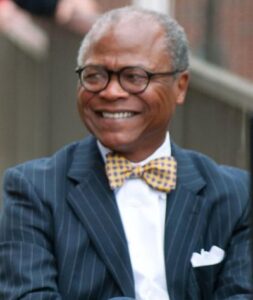
Alvin J. Schexnider is a former vice president of the Virginia Board of Education and a former member of the State Council for Higher Education in Virginia. His most recent book, Reimagining the Academic Presidency: A Leadership Guide Amidst Uncertainty and Upheaval, coauthored with two former presidents, is scheduled for release in September 2026. He can be reached at alvin@schexniderllc.com.
Stay tuned.


