
The Constitution begins with three words that should guide everyone entrusted with public responsibility: “We the People.”
Those words establish where the authority of our government begins. The people confer that authority, and those who exercise it remain accountable to them. Throughout my years in public service, I have returned to that fundamental principle. Government exists to serve the people.
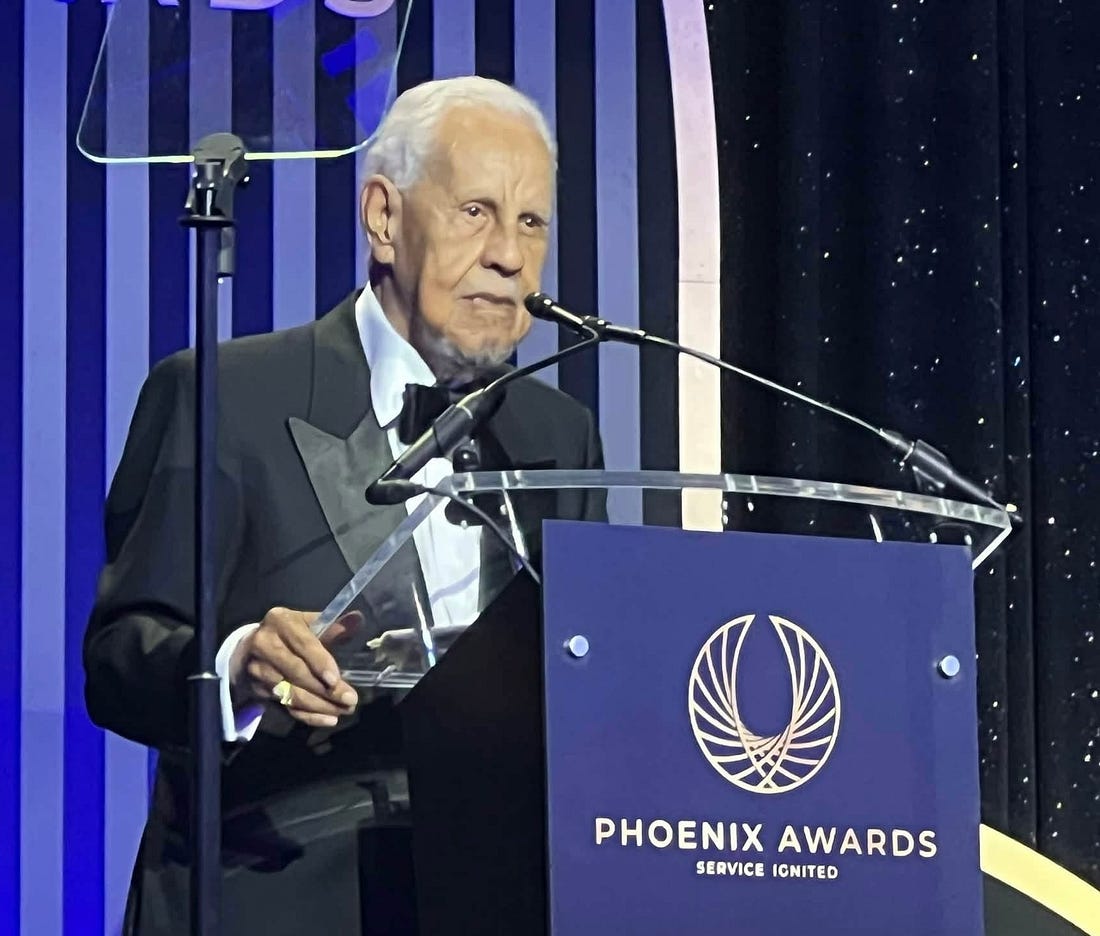
On Saturday, September 19, in Washington, DC, I received the 2026 Congressional Black Caucus Foundation Board of Directors’ Phoenix Award, one of CBCF’s highest honors. The occasion gave me an opportunity to reflect on that responsibility and on the people whose determination made my journey possible.
I am grateful for this recognition. Its significance reaches beyond an individual. My life in public service has been shaped by people who believed that our country’s promises belonged to them, even when its laws and institutions denied them the full measure of those promises.
I grew up in segregated Richmond, where the distance between America’s founding promises and the realities of daily life was unmistakable. Yet my mother told me as a little boy that I could be ANYTHING I wanted to be. She made certain I understood that the Declaration of Independence’s assertion that “all men are created equal” applied to me, too.
Her words gave me a sense of possibility that segregation sought to deny. Before I held public office, my mother taught me that this country’s promises belonged to me. The restrictions imposed by others could not diminish my worth or define the limits of my aspirations.
That lesson has remained with me throughout my life. When I speak of “We the People,” I think of every child who deserves that same assurance of belonging and opportunity. Our responsibility is to ensure that the promises we teach our children are reflected in the lives they are able to lead.
The progress I have witnessed was made possible by people who insisted on those promises. Parents demanded a quality education for their children. Teachers prepared students for opportunities they themselves had been denied. Workers, veterans, clergy and neighbors organized, registered voters and challenged injustice. Many received little recognition, but their efforts helped change the Commonwealth and the nation.
When Virginians elected me governor in 1989, making me the first African American elected governor of a state in our nation’s history, the achievement belonged to the people. They cast the ballots. They challenged assumptions about what was possible. They demonstrated that the future need not be confined by the prejudices of the past.
Their decision also imposed a responsibility on me to serve all the people, including those who had not voted for me.
Every elected official must understand that obligation. A public servant must listen beyond the circle of supporters, advisers and contributors. The concerns of people who lack access to influence deserve the same attention as those who can readily command it.
The people deserve a government that responds to their needs, explains its decisions and accounts for its use of their resources. They have a right to ask whether their children are learning, whether their communities are safe, whether opportunity is within reach and whether public money is being spent responsibly.
Every budget, every law, and every exercise of public authority affects someone’s ability to build a life, support a family or plan for the future. Those consequences must remain at the center of governing.
The Phoenix Awards offer an occasion to recognize contributions to that continuing work. They also remind us of our responsibility to prepare those who will follow. Through education, scholarships and leadership development, we can help young people participate fully in the decisions that will shape their lives.
We should encourage them to study our history, understand their government, and ask difficult questions. They must know that “We the People” carries both authority and responsibility. Voting, remaining informed, participating in community affairs, and holding leaders accountable give those words life.
That accountability must apply consistently. Political affiliation, friendship, and position cannot excuse a failure to serve the public. We must demand what is right and criticize what is wrong, regardless of who receives the praise or the criticism.
At 95, I remain convinced of the people’s capacity to move this country forward. I have witnessed it. Whatever recognition I have received rests upon the opportunities they made possible and the confidence they placed in me.
I accept this honor with gratitude and a continuing sense of obligation. My mother’s assurance that America’s promises applied to me remains a measure of the work before us. Every child deserves to grow up knowing those promises apply to them, too.
The Constitution begins with “We the People.” Those entrusted with public service must never forget whom they serve.
Stay tuned.


